For a 20-minute window on September 15th, the sunrise sprawled across Norfolk Southern’s Elkhart Terminal, revealing a face that had shown itself only once in the last 70 years. Just a few feet away, the compacted remains of two monumental roundhouses rested in the weeds. On the northernmost track, the modern incarnation of the Lake Shore Limited came and went, while a steady procession of freight trains and locals snaked through the yard.
New York Central No. 3001 stood a few thousand feet outside the closed gate of the National New York Central Railroad Museum, where it had made its home since 1984. Decades prior, the Elkhart terminal had been one of its regular ports of call, a place accustomed to hundreds of Mohawks, dozens of Hudsons, and a few Niagaras, all hallmarks of the Central’s age of steam.
3001 wasn’t waiting for a stall in the roundhouse, a spin on the turntable, or a mad dash down the Water Level Route at 80 mph, but for a modern escort working for the railroad’s successor — ceremonially decorated in the handsome gray and lightning-stripe paint scheme of the New York Central fleet. No. 3001 had escaped, not through sudden or worrisome means, but through careful mechanical reconditioning, and the kind of protracted, contractual negotiations that come before A Big Thing.
All it had to do was travel fewer than 100 miles at less than 30 mph. Before that, it needed to endure 30 minutes of back-and-forth movement to determine whether any bearing surface would betray a temperature rise.
For all the prestige of the American Locomotive Company and the hallowed iconography of New York Central steam; for all the hushed recollections of a Mohawk that once refused to abdicate; for all the eager promises that one of these fossilized machines might someday roam the earth again, No. 3001 still had not traveled more than a few hundred feet in 40 years.
The march to this moment was months — if not years — in the making.
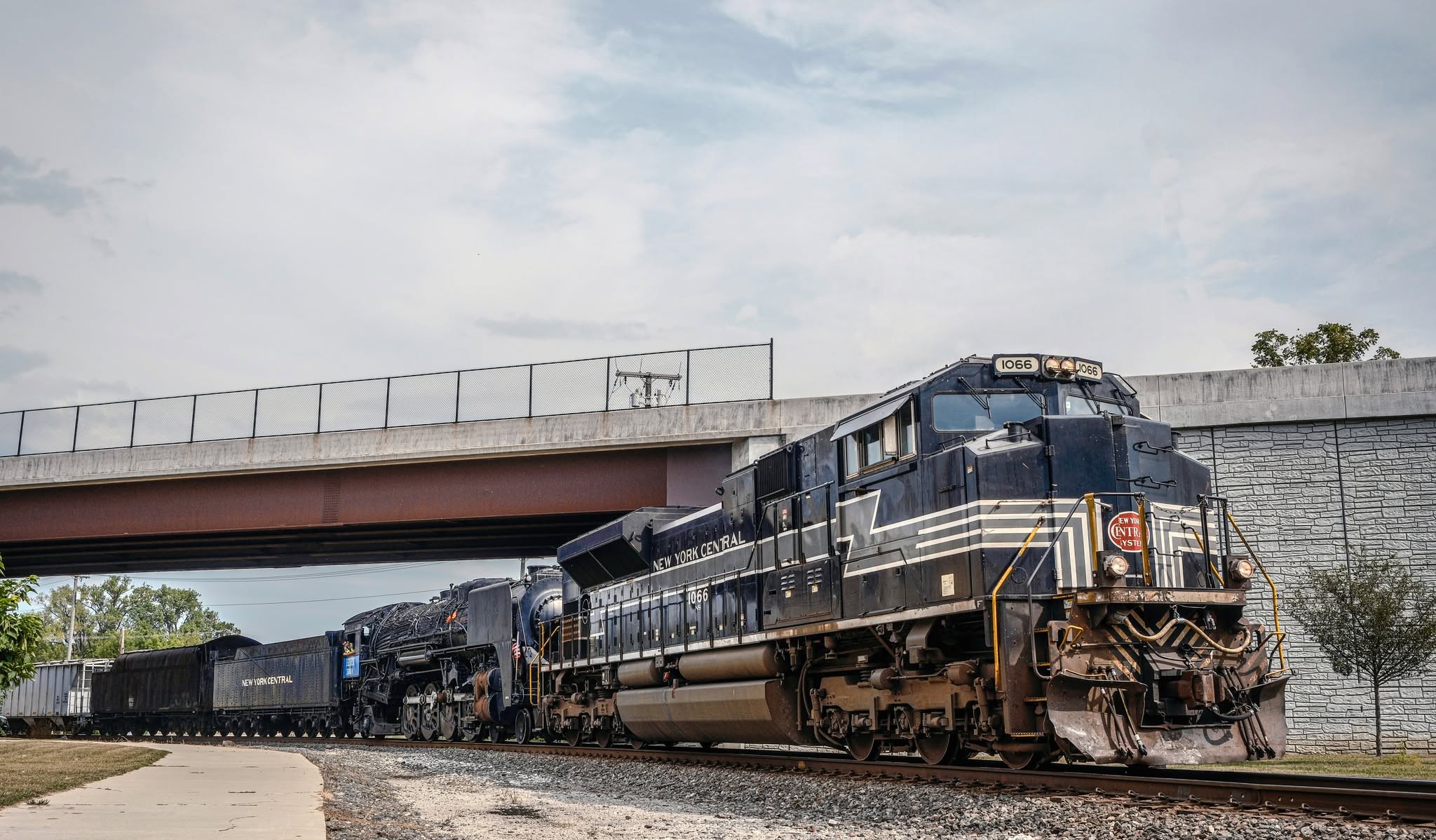
Norfolk Southern’s heritage unit, painted in homage to the New York Central, escorts 3001 through Goshen, Indiana, and onto the Marion Branch.
A generous timeline begins with Norfolk Southern’s first approvals to relocate the locomotive more than 12 months earlier. A more expansive one reaches back to 2020, when a quiet study and inspection of No. 3001 was undertaken for the New York Central Historical & Technical Society at the behest of a former railroad executive.
A much longer road began in 1984, when No. 3001 was freed from its original display site in Texas and led north to Indiana for a second coming that never quite materialized. It was briefly considered for an imagined Conrail steam program, but that dream was extinguished almost as quickly as it had appeared. Its tubes and flues were removed for inspection and work, but momentum carried the overall interest no farther than a year or two.
A few suitors passed through Elkhart in the early 2000s to kick the worn tires and imagine. An inquisitive teenager or young enthusiast might ruffle feathers, arrange meetings, and ask troublesome questions, but No. 3001’s prospects for a different future grew slimmer and slimmer. The engine grew more tired with every passing year.
Meanwhile, a seemingly unrelated chain of events began drawing those fractured histories together. We had a former New York Central line connected by a series of intact — if not yet fully restored — New York Central stations. Because of those circumstances, we had also come to own seven matched passenger cars from the Central’s famous daylight train, the Empire State Express.
The case for No. 3001 grew sharper.
We were one of the most active railroad preservation organizations in Indiana and the curator of a new heritage railroad. The New York Central had once been Indiana’s largest railroad, until its 1968 merger with the Pennsylvania Railroad created Penn Central. If there was ever a time to take a run at No. 3001, this was it.
Throughout a prolonged, three-year negotiation, the outcome was never entirely clear. Progress came in fits and starts. There were contracts between the Museum and entities that had since dissolved. One of those entities had its own agreement with the Mohawk’s original owner, from which it had subleased the locomotive. We first needed to establish that Lakeshore remained legally inactive, leaving No. 3001 as a peculiar blend of abandoned property and inherited asset.
Then came the Museum of the American Railroad, which retained a clawback provision allowing it to reclaim No. 3001 if Lakeshore dissolved — a provision it had never exercised. Historic documents and agreements had to be located and interpreted. A new contract eventually emerged among all three parties: the Museum of the American Railroad would not contest a transfer of the asset so long as No. 3001 was not abandoned again, while the City of Elkhart would surrender its own claim to the locomotive.
We knew we were proposing to remove one of the most recognizable objects at the National New York Central Railroad Museum, and we wanted the arrangement to have merit for everyone involved. The Museum needed a strategic plan, a rolling-stock deaccession strategy, and additional guidance from the railroad-preservation, exhibition, and museum-curatorial fields.
The Museum building itself — with its displays, archives, and historic artifacts — is quite lovely. Its rolling-stock collection, however, was a mixed bag: hand-me-down maintenance-of-way equipment from Conrail’s assortment of New York Central and Pennsylvania Railroad leftovers, together with a few gems scattered among them. This would become a partnership extending far beyond No. 3001 — and one that would continue after the locomotive departed. In the weeks before the 3001’s looming departure, the City of Elkhart netted a million-dollar grant to help redevelopment efforts around the Museum. That partnership, which included our assistance in grant writing and strategic planning, was paying off already.
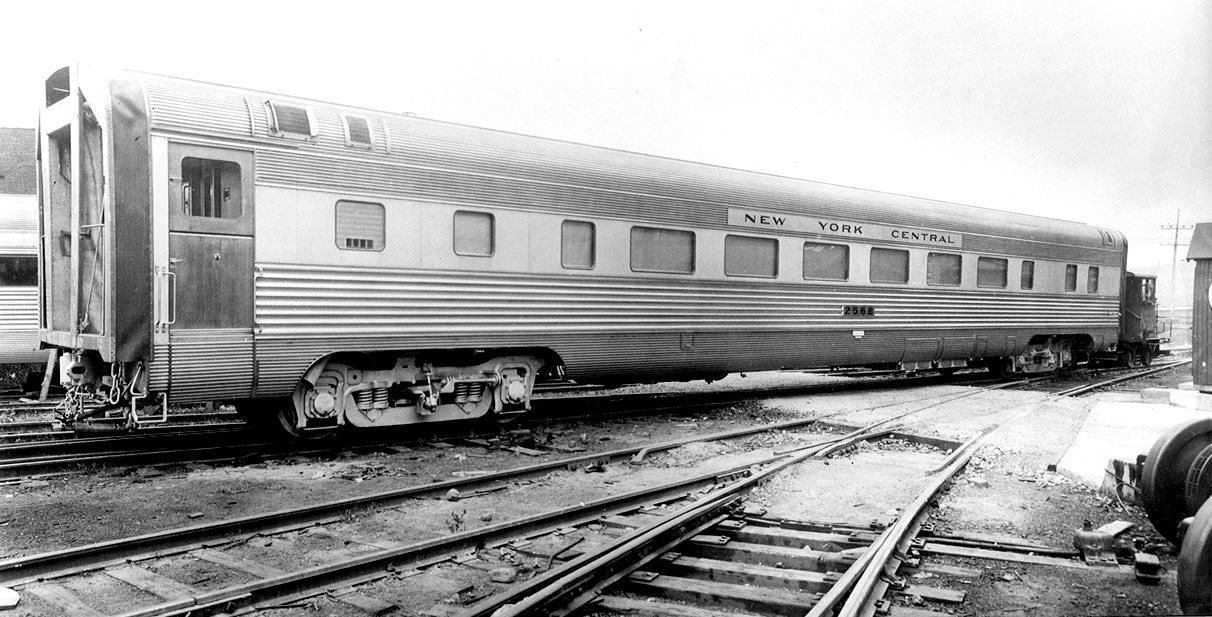
New York Central 2568 – from the original 1941 consist of the Empire State Express. Now restored and operating, and destined to ride behind 3001.
Ironically, the final piece of the contractual puzzle did not arrive until we were preparing to announce the acquisition of the Empire State Express fleet in 2023. As speculation grew that our announcement concerned No. 3001, we hurriedly put the finishing touches on an agreement for the locomotive itself.
Not only would a measure of the New York Central rest with us in the stainless-steel car bodies of seven matched passenger cars, but its largest surviving steam locomotive would be ours as well. When we announced that the Empire fleet was now ours, we also knew that so was 3001. Believe it or not, the deal was broadcast live on Facebook during a city council meeting, where the Museum announced its intentions to partner with us and free the Mohawk. While the locomotive was technically under the auspices of the parks department, everyone wanted the arrangement to be reviewed in broad daylight. Everything passed, with only one comment on the video feed remarking that it sounded like the future was bright for 3001. Nevertheless, we waited a year to share the news.
Flash forward to September 15th, 2026, at 10:45 a.m.
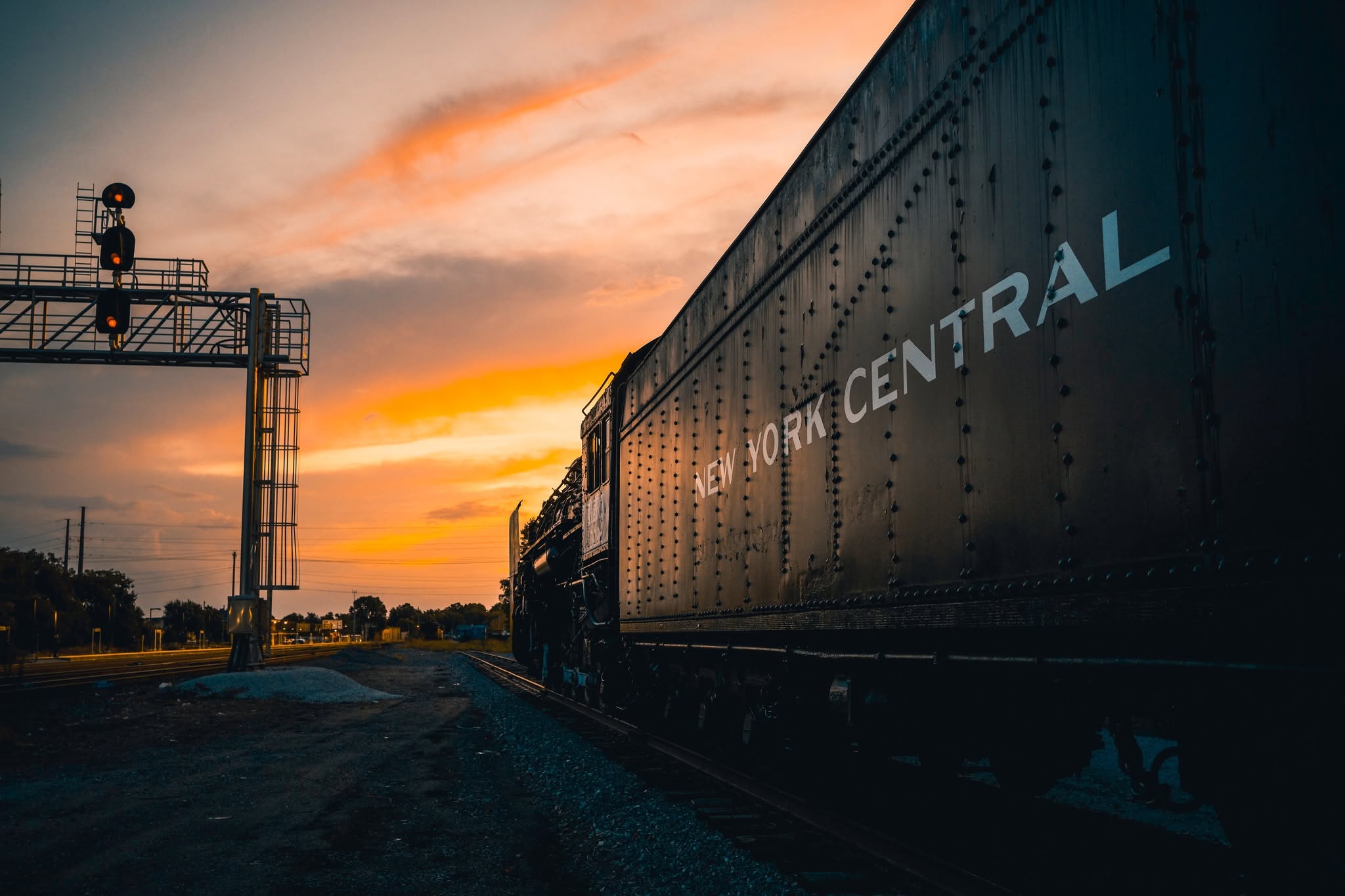
Dawn at the mouth of the Elkhart Terminal on September 15th, 2026. It will be the 3001’s last morning within sight of the National New York Central Railroad Museum.
No. 3001 walked onto home rails behind its diesel escort. A hopper car and the auxiliary tender that had once served the Chessie Steam Special and American Freedom Train No. 2101 followed — a mishmash of railroad history drawn from different eras. Bringing up the rear was a switcher on loan from sponsor/partner Horizon Rail.
Further out of town on the former New York Central Marion Branch, the locomotive loped along, pausing for occasional inspections, bearing-temperature readings, and a little Alemite encouragement. It would glide onto the Nickel Plate line at Claypool, where the Nickel Plate and New York Central once crossed and interchanged traffic, and then finally slip through southern Fort Wayne, past Baker Street Station over Pennsylvania rails, by the concrete foundation of the Winter Street Roundhouse, over former Wabash trackage, and through East Wayne Yards, in a fallen flag tour only possible in our namesake city.
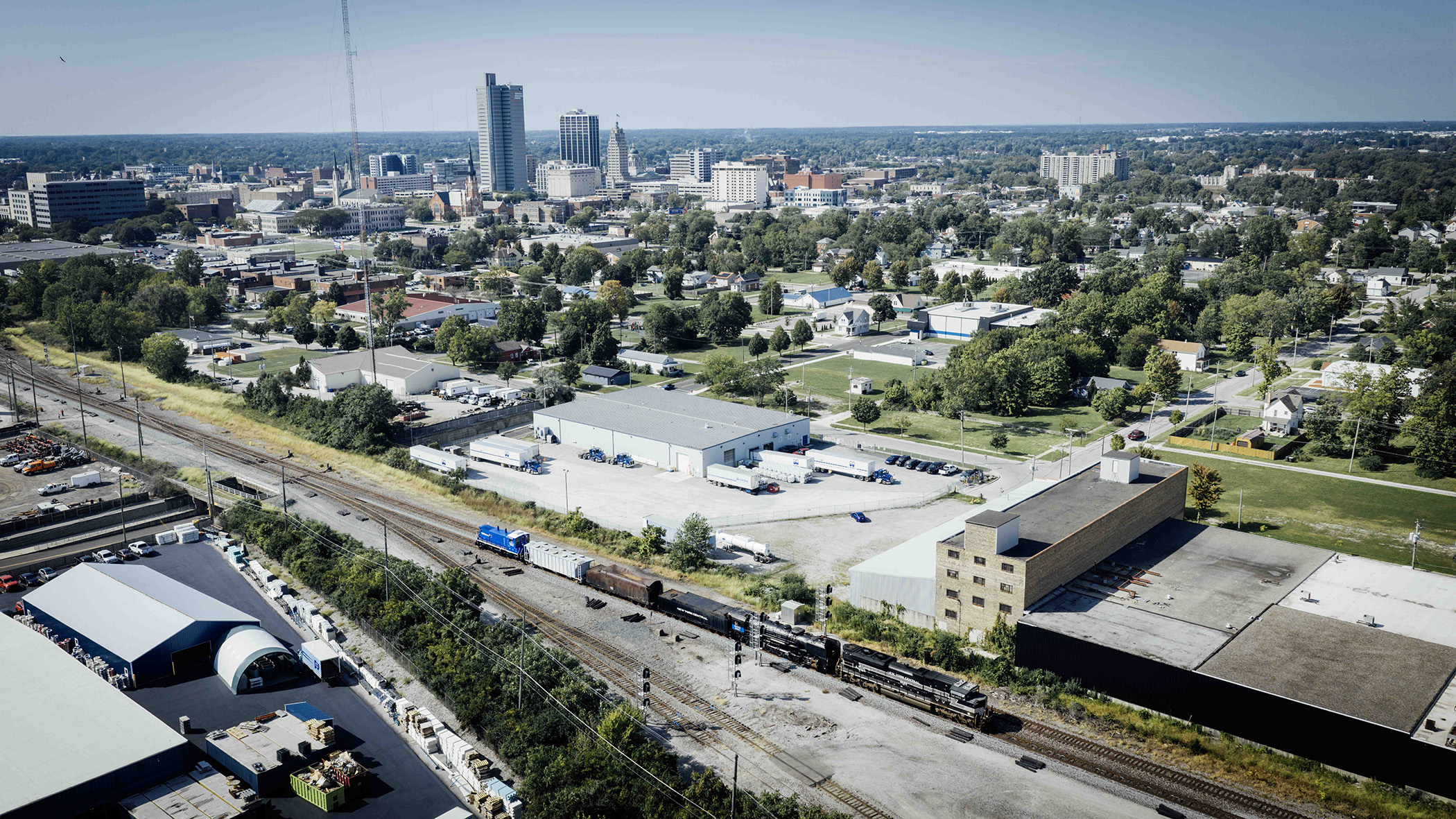
New York Central 3001, escorted by Norfolk Southern heritage unit 1066, passes through Fort Wayne, Indiana amid the former Wabash and Pennsylvania Railroad yards.
By 7 p.m., No. 3001 was nestled inside the shop. Our shop. Under cover for the first time since the 1950s. In terms that could be used to describe both us and the locomotive, we were Quiet. Tired. Bewildered.
We are so accustomed to seeing another locomotive in this shop that No. 3001’s proud numberboard and smoke deflectors will require some adjustment. Mind you, this is not the first time we have housed two large mainline steam locomotives. Chesapeake & Ohio No. 2716 once served as a temporary interloper while it was briefly restored and then sent south again, before crews could truly dig into the overhaul of Nickel Plate Road No. 765 in the 2000s.
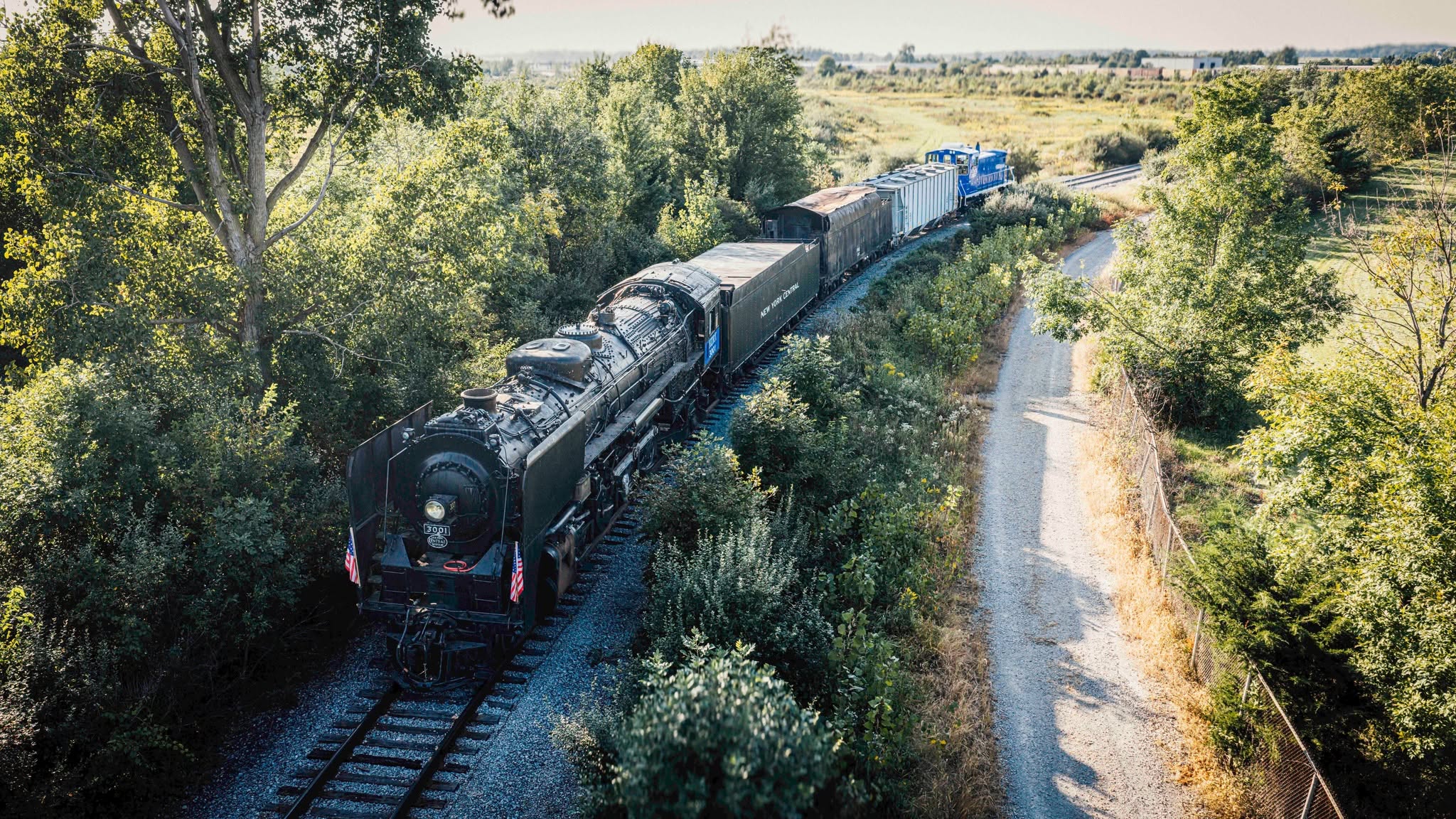
New York Central 3001 is pulled toward the restoration shop at Edgerton Road.
“This is our Lawton Park,” I reminded the quiet group of eager helpers gathered alongside No. 3001 during its initial movements out of the Museum. Novelty aside, we had also guaranteed ourselves several, if not many, more years of work. A joyous burden.
The handsome No. 3001 will eventually be reduced to its boiler, frame, wheels, and a kit form of locomotive not sold in stores. With that will undoubtedly come delays, expenses, complications, setbacks, and discoveries. While many names and faces have changed since 1972, not all of them have. This is neither our first horse nor our first rodeo.
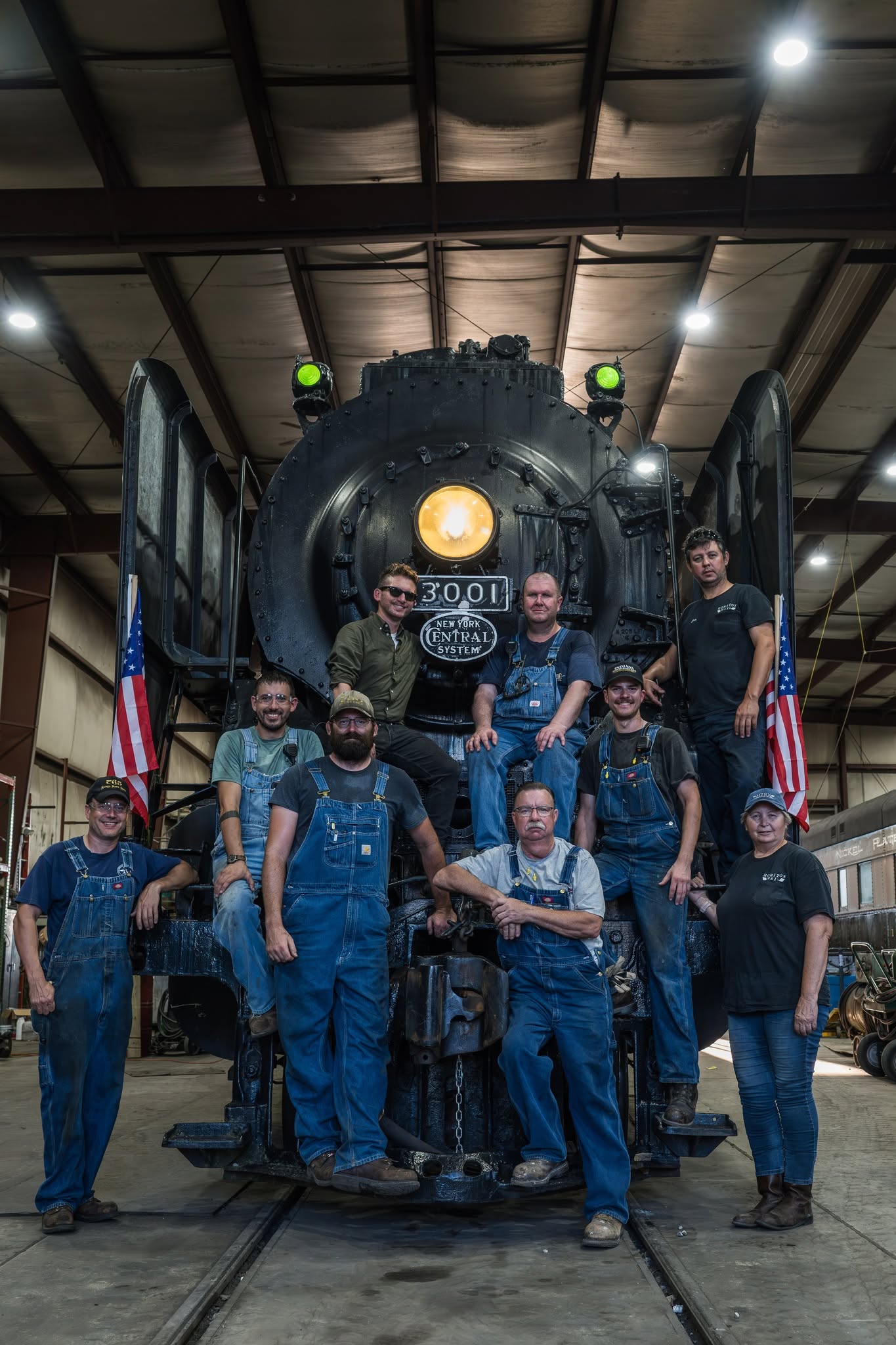
The crew who prepped and administered the 3001’s liberation from static display included representatives from the Steam Railroading Institute, Nashville Steam, Horizon Rail, and other organizations. From left: Chris Zhart, Aaron Farmer, Matt Lee, Kelly Lynch, Chuck Young, Zach Hall, Stephen Hook, Jon Jaros, Mary Armstrong.
Admittedly, this author was not prepared for the sight of No. 3001’s main rods turning — whether just outside the Museum, two miles away, or 15. A lifetime around trains and the careful study of black-and-white 16mm film showing these prehistoric animals connecting hither and yon did little to insulate me from the sight of this smart-looking machine slipping between trees and crossings and leaning into curves. The ghost of the world’s most famous railroad and all that it represented was awakening.
Aside from its missing components and jacketing, a fresh coat of paint, and illuminated headlights and class lights, it looked like the halcyon days of steam on the New York Central.
It is just $4 million and several years away from sounding like them, too. You can contribute to 3001’s revival by clicking here.
You can also donate by mail:
Re: NYC 3001
Fort Wayne Railroad Historical Society
Post Office Box 11017
Fort Wayne, Indiana, 46855
EIN number is 23-7255168
 ABOUT THE AUTHOR
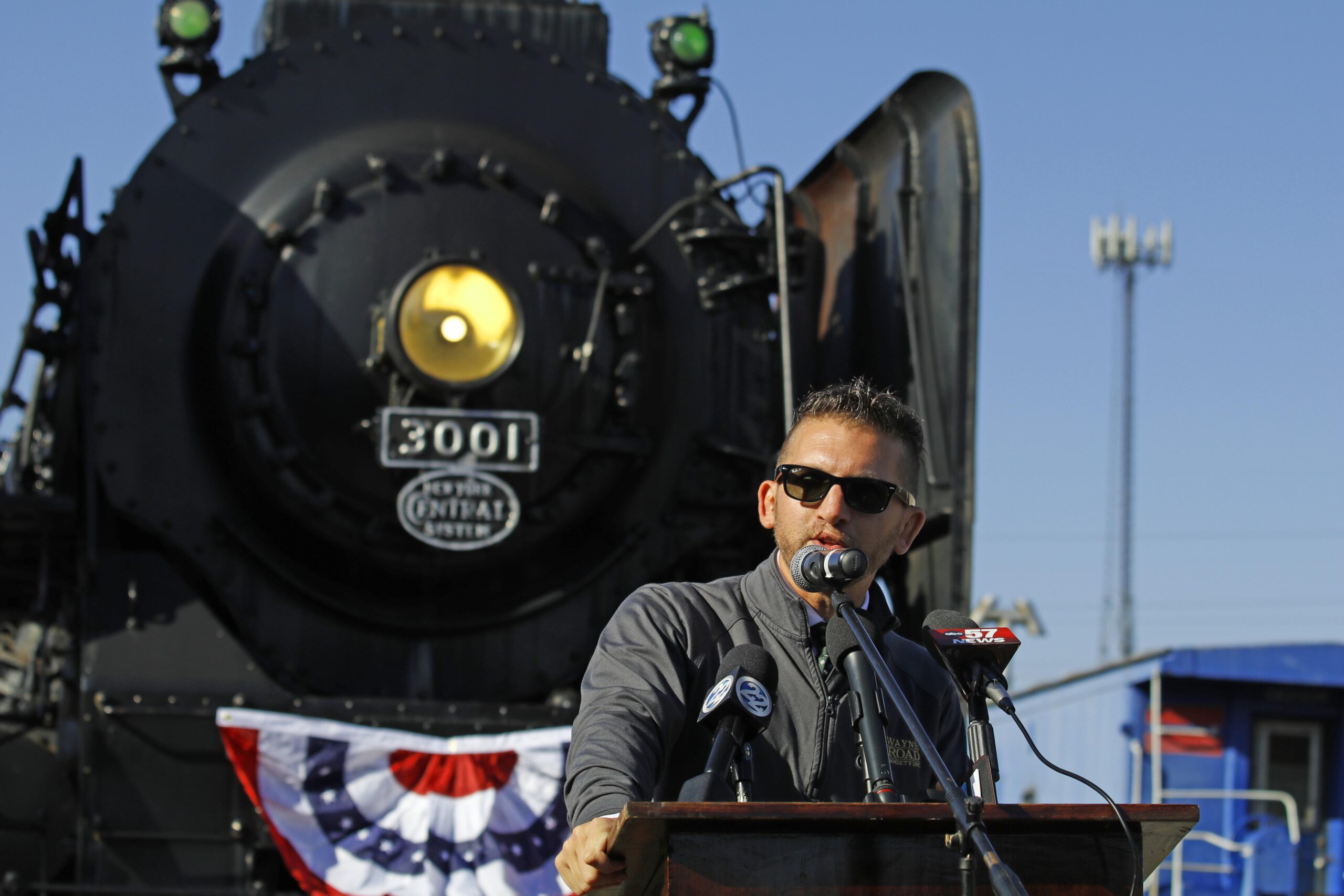
Kelly Lynch is the Executive Director of the Fort Wayne Railroad Historical Society and one of the architects of the Indiana Rail Experience. For more than 20 years, he has worked at the intersection of railroad preservation, heritage tourism, marketing, and storytelling, helping historic equipment and organizations find new relevance with contemporary audiences. He is also a filmmaker and consultant to the railroad, tourism, and entertainment industries.